Apple is reportedly lining up a big smart home push for Tuesday, October 13, centered on a new Siri-focused home hub, a refreshed HomePod mini, and an updated Apple TV. All of this comes from Bloomberg’s Mark Gurman, who reports that Apple is preparing a “Siri AI” upgrade across its living-room hardware after pushing these products back from their original 2024 target. The smart display-style hub is said to be the star of the show, with a 6-inch screen meant for kitchen counters and walls, backed by always-on power and a camera for FaceTime. Apple has not confirmed any of these plans, and product timelines can and do change, so nothing here should be taken as guaranteed.
A Siri-first hub for the kitchen and living room
According to Gurman’s report, Apple’s upcoming smart home hub is built around a square 6-inch display and is meant to live in multiple rooms around the house. Apple is said to envision customers placing several of these around the home, on countertops or mounted on walls, to control smart home devices, make video calls, and use it as an always-available family screen. The device reportedly has no battery, no power button, and no volume buttons, and is designed to stay plugged in all the time over USB-C. The body is described as gray aluminum, about as thick as an iPhone, with a quarter-inch black bezel, rounded corners, and no sharp edges.
The countertop version is said to sit on a round metal base with several rings of perforated speaker holes, joined to the screen by a polished metal arm. You can reportedly tilt the display forward or back by hand, and the base has a rubberized bottom so it stays put on a table. Gurman compares the overall look to the old iMac G4, with the screen perched above a more substantial base that holds the speakers and microphones. A single FaceTime camera is reportedly placed on the front of the display, with microphones and speakers built into the base to handle voice and video calls, smart home commands, and audio playback.
Wall-mounted model and smart home uses
Gurman reports that Apple is also working on a wall-mounted version of the hub, code-named J491, which keeps the 6-inch square display but attaches to a flat base that sits directly against the wall. That lower section reportedly holds the speakers and microphones and also connects via USB-C power, so this model is meant to stay plugged in just like the countertop unit. The idea, according to the report, is to offer a more permanent, wall-mounted option in the home.
On the software side, the hub is said to focus on everyday household tasks. Gurman reports that it can control smart home devices, handle video calls and intercom-style messages, play music and podcasts, and run photo slideshows. It is also described as a “kitchen information screen” for watching videos and looking up recipes by voice, with Siri AI used to respond to natural language questions. The report says Apple wants people to rely on this device for quick glances at calendars, reminders, and messages without reaching for a phone, essentially giving each room its own always-on status board.
Personalization, recognition, and privacy features
One of the main software ideas, according to Gurman, is personalization based on who is near the device or speaking to it. The hub is said to recognize users by voice or face, then change what it shows on screen, such as personal reminders, messages, or playlists. A “visitor mode” is also reported, which would hide personal information when someone else approaches or when guests are using the device, so private content does not pop up in front of others.
The face-based system is described in the report as less reliable than Face ID on an iPhone or iPad, but backed up by other methods. If the hub cannot identify someone correctly, an iPhone can reportedly work as a secondary authentication method, letting the person confirm their identity or access personal data. In dark rooms, a Mac-style “Edge Light” feature is said to illuminate the area around the screen so the camera can better see whoever is standing in front of it. All of these details come from Gurman’s reporting; Apple has not discussed how privacy controls or data handling would work on such a device.
Watch-style interface with apps and widgets
On the software design front, Gurman reports that the interface mixes ideas from the Apple Watch, Apple TV, and iPad. The main screen is said to use iPhone-style widgets and clock faces, along with photo slideshows and user-selectable wallpapers. One clock face is described as looking like a lava lamp, with the hour shown in digital form and the minutes listed below in a more fluid visual layout. Swiping up from a clock or photo screen reportedly brings up an app launcher, giving quick access to common apps.
According to the report, the hub will run apps like Calendar, Messages, Photos, FaceTime, Notes, Reminders, Music, and Podcasts. The icons are said to resemble Apple Watch icons, but when opened, the apps use multi-panel layouts more like an iPad. For example, the Messages app is described as showing a conversation list on one side and the selected thread on the other. Users can reportedly press and hold to rearrange apps and widgets, similar to rearranging the Home Screen on an iPhone.
New HomePod mini, Apple TV, and Siri AI focus
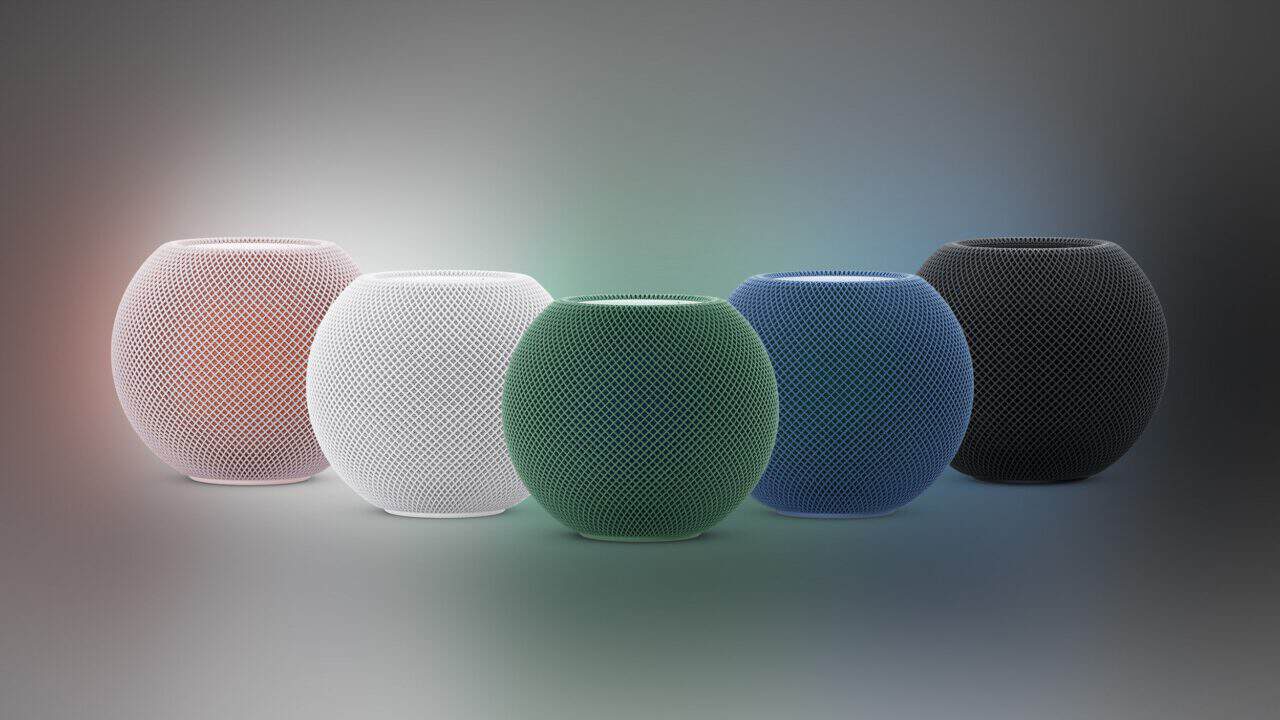
Beyond the hub, Gurman reports that Apple is preparing refreshed versions of both the HomePod mini and Apple TV for that same October 13 target date. Both products are said to keep their current hardware designs, but gain faster chips to handle Siri AI features. The new HomePod mini is reportedly coming in additional colors, including pink and green, which would sit alongside the existing shades. Siri AI is described as the driving reason these products slipped from their original 2024 window, with Apple said to have delayed them so the software platform could catch up.
The report says Apple also plans to update the larger HomePod at a later time, rather than alongside the smaller speaker and the new hub. The hub, the HomePod mini and the Apple TV are all expected to tie into the same Siri AI experience, giving users similar voice control and smart responses whether they are in front of the TV, talking to a speaker, or standing at the new display. Gurman’s report does not mention any pricing or regional rollout details, and Apple has not shared its own timeline, so there is no official word on when buyers will actually see these devices.
Future plans: camera, sensors, and a higher-end hub
Gurman’s reporting also points to a wider smart home roadmap inside Apple. One device described in the report is a privacy-focused home security camera and sensor that can detect which room a person is in without recording video. The idea would be to use presence detection for automations, like turning lights on when you enter a space, while avoiding the feeling of being on camera inside your own home. Details on this product are still early in the reporting, and Apple has not talked about such a device publicly.
At the higher end, Apple is said to be working on a more advanced smart home hub with a 9-inch display mounted on a robotic arm that can swivel 360 degrees. That device would apparently be able to turn toward users in a room. Gurman also reports that Apple is working with third-party manufacturers to widen the range of HomeKit-compatible devices, bringing more categories of connected products into the Siri-powered ecosystem. All of these plans are based on one reporter’s sourcing, and Apple has not confirmed any of them, so smart home buyers should see this as a snapshot of what might be coming rather than a firm product schedule.
View the original report.