Shelly is bringing its smart home gear into video for the first time with the Shelly Camera, a compact indoor security camera built around local control, open standards, and deep support for third‑party platforms. The camera adds smart video monitoring to the Shelly ecosystem and is aimed at people who want to keep ownership of their footage and run their own object detection instead of relying only on a subscription cloud. It works with Home Assistant and Frigate NVR, supports RTSP and WebRTC, and exposes a separate low‑resolution stream designed for local AI processing on your own hardware. The camera has been announced and listed in Shelly’s US store, but is not yet purchasable there and shows only a notify‑when‑available option.
First Shelly Camera Built For Home Assistant And Frigate Users
The Shelly Camera is Shelly’s first security camera and brings smart video monitoring into an ecosystem that already includes switches, plugs, relays, and sensors. Shelly calls it a way to add “smart video monitoring” to its platform for the first time, but the camera is also clearly aimed at DIY smart home fans who use tools like Home Assistant and Frigate NVR. The camera works with the Shelly Smart Control app for basic setup and viewing, but the company is also naming Home Assistant, Frigate NVR, Alexa, Google Home, and SmartThings as supported platforms from the start.
For local video systems, the camera supports RTSP streaming to compatible DVR and NVR software, which is what lets it tie into Frigate NVR and similar setups without workarounds. It also offers WebRTC for peer‑to‑peer live viewing, which helps keep latency low when pulling up a feed. On top of that, Shelly exposes an optimized low‑resolution stream meant for local AI processing.
Compact Hardware Focused On Indoor Use
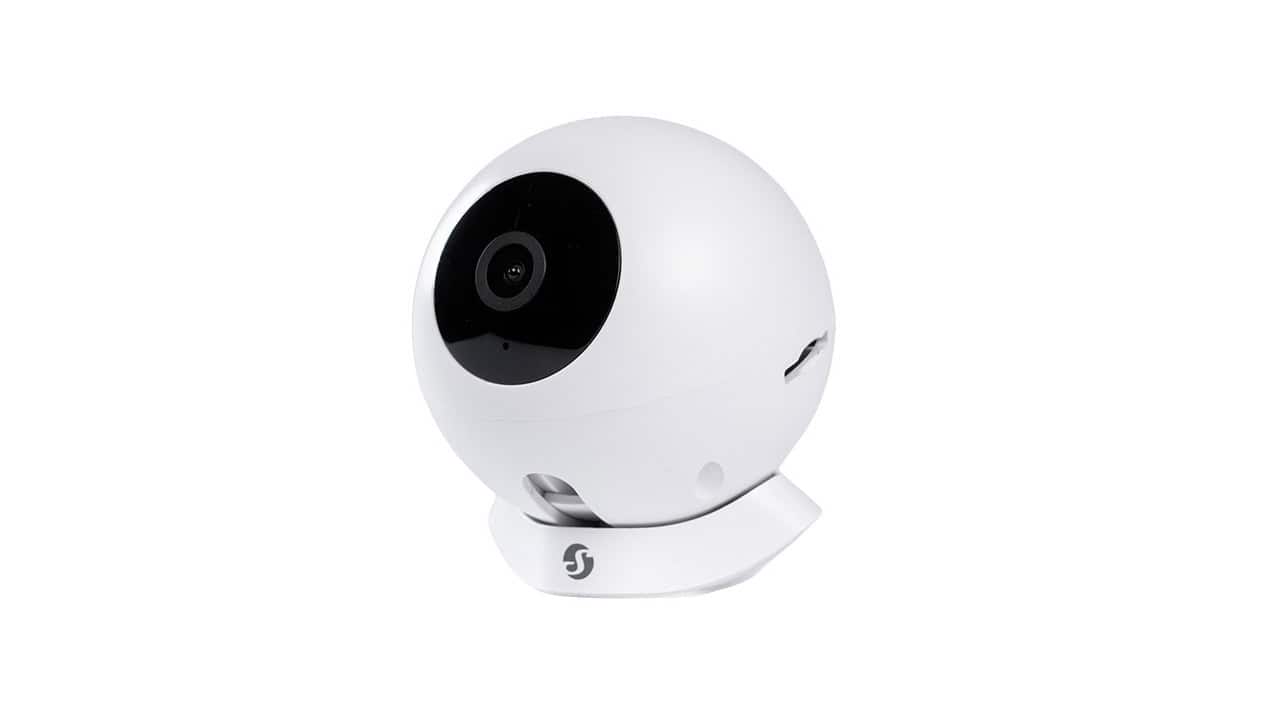
The hardware itself is compact and clearly aimed at indoor mounting. The Shelly Camera records in Full HD 1080p with a resolution of 1920 x 1080, paired with a 110 degree horizontal and 70 degree vertical field of view. It uses black‑and‑white night vision for low‑light scenes, and its small footprint makes it easier to place on a shelf, counter, or wall without standing out.
Physically, the camera measures 60 x 53 x 53 mm and weighs 60 g, so it is small and light enough for flexible placement. The head supports manually adjustable pan and tilt, meaning you can aim it where you want but it does not motorize itself. It ships with a magnetic base and an adhesive metal plate, so you can stick that plate to a wall or ceiling and then attach the magnet, or just set the camera freestanding on its integrated base. Power comes over USB‑C with a 5 V, 1 A supply, which keeps wiring straightforward indoors.
For connectivity, Shelly includes dual‑band Wi‑Fi (2.4 and 5 GHz) plus Bluetooth 4.2. Dual‑band support helps the camera fit better into homes that steer most devices onto 5 GHz, while Bluetooth plays a role in setup and pairing. A built‑in microphone and speaker allow full two‑way audio, so you can hear what is happening and talk back through the camera from your app or compatible smart display.
Motion Detection, Zones, And Local AI Streams
On the software side, the Shelly Camera uses on‑device video analysis for motion detection and supports up to 10 customizable motion and privacy zones. Motion detection is handled in the camera, which then sends instant alerts that include an image preview of what triggered the event. That image preview makes it easier to decide quickly whether an alert is something to worry about or just the family cat.
You can carve the frame into up to 10 separate areas to treat differently. Motion zones let you focus alerts on certain parts of the picture, like a doorway or hallway, while ignoring the rest. Privacy zones let you blackout selected areas so the camera never records them at all, which can be useful for things like neighboring windows or parts of a room you do not want monitored.
What sets the Shelly Camera apart for privacy‑minded users is the extra low‑resolution stream that Shelly exposes specifically for local AI. This stream is meant to be pulled into software like Frigate NVR or other local object recognition tools, so you can run your own models on your own hardware without sending that analysis through a paid cloud. Combined with RTSP, this gives power users control to build local detection pipelines that can tell people, pets, and vehicles apart using their own systems rather than only Shelly’s subscription AI.
Strong Privacy Controls And Local Storage Options
Privacy controls on the camera go beyond software settings. Along with the digital privacy zones that keep selected parts of the frame permanently out of view, Shelly added a dedicated Privacy Mode that shuts off recording, the microphone, and the speaker together. A side button toggles this Privacy Mode with a single press, so you do not have to open an app every time you want the camera to stop seeing and hearing.
For full shutdown, there is a back switch that powers the camera off entirely. When that switch is off, there is no streaming, no recording, and no network activity from the camera at all. This kind of physical control appeals to people who do not fully trust software toggles and want a hard cutoff for sensitive spaces.
On storage, the camera supports local recording to a microSD card up to 512 GB, formatted as FAT32, though the card is not included. Recordings can be stored on the card, in Shelly’s EU‑based cloud, or to both at the same time, letting you choose how much you want to keep on your own hardware versus in the cloud. If you run the camera without a microSD card, clip length depends on your network: Shelly cites about 20 seconds per clip at 720p and about 10 seconds at 1080p on slower connections, with longer clips possible on faster networks.
Cloud Subscription Versus Local Ownership
Shelly is taking a split approach to subscriptions with this camera, and the details matter. Live streaming is available to all Shelly Camera users without a paid plan, and local recording to microSD is also possible without any subscription. That means you can set up a camera, store clips locally, and view live video without paying for ongoing cloud storage.
The subscription side comes into play if you want cloud recording, extended history, AI recognition, and stronger event tracking in Shelly’s system. Shelly’s own Cloud Camera Storage description says that the paid Camera Storage add‑on unlocks cloud recording plus AI recognition that can distinguish people from pets and vehicles in the cloud. Those AI features are not part of the free tier, and many early mentions that described the Shelly Camera as completely subscription‑free missed that difference.
For owners who would rather not subscribe, the local AI stream and RTSP support are the answer. You can run your own recognition pipeline on something like Frigate NVR or another compatible setup, keep footage stored on your own drives or SD cards, and still get person or vehicle detection without buying a cloud plan. That flexibility is what makes this camera stand out in a crowded indoor camera market.
Advanced Controls And Availability Status
Beyond the main smart home platforms, Shelly is giving power users more ways to plug the camera into custom systems. The camera works with Alexa through the Camera Stream Controller capability, and with Google Home via the Camera Stream trait, so you can pull up the feed on compatible smart displays or TVs. It also works with SmartThings for people who have standardized around that platform.
For deeper control, the camera supports scripting, MQTT, and WebSocket, and includes a built‑in local web interface for direct control in a browser. Those features speak directly to advanced users who want to script actions, tie the camera into existing MQTT brokers, or manage it without going through a cloud app. Combined with RTSP and WebRTC, this makes the Shelly Camera unusually open compared with many closed, app‑only indoor cameras.
US buyers still have to wait, though: the listing carries a notify‑me option rather than a buy button. For smart home owners who care about owning their video, running local AI like Frigate, and still having the option of a cloud plan, the Shelly Camera is positioned as a compact indoor option built more around openness than around locking users into a single app or service.
View the original press release.