Hisense is teaming up with Amazon’s Alexa+ to let people control select air conditioners with more natural voice commands, moving away from memorized phrases and fiddly menus. Announced at IFA 2026 in Berlin, Hisense says it will be among the first home appliance brands to bring smart home devices to the Alexa+ AI assistant using Amazon’s new Smart Home AI Toolkit. In the coming months, Alexa+ customers will be able to tell the assistant what they want in plain language, and Alexa+ will figure out which settings on supported Hisense air conditioners need to change. For smart home users who mostly care about things “just working” when they speak, this is the big shift Hisense is leaning into.
Alexa+ control for select Hisense air conditioners
The core change is that select Hisense air conditioners will work with Alexa+ in a more conversational way, instead of relying on fixed commands. Users will be able to say what they need in simple terms, and Alexa+ will handle the details behind the scenes using Amazon’s Smart Home AI Toolkit. Hisense is one of the first home appliance brands working with this toolkit for Alexa+. When Amazon introduced the Smart Home AI Toolkit in July 2026, it named Hisense in its own list of launch brands, alongside companies such as Bosch, Whirlpool, iRobot and Yale Home.
Hisense and Amazon are not sharing a specific launch date, only saying that this capability is coming in the months ahead. When it rolls out, the idea is that Alexa+ will take a user’s plain-language request, map it to the right air conditioner controls, navigate the menu logic, and then carry out the change. That means users will not need to know which exact setting to adjust, where that setting lives in a device menu, or what precise phrase to speak for the command to work.
Why natural-language control matters for smart home users
The big benefit for Alexa+ customers is that they can stop thinking like programmers and start talking to their home more like they talk to another person. Instead of remembering exact trigger phrases or digging through a mobile app to find the right air conditioner setting, they describe the outcome they want and let the system do the work. Alexa+ handles the translation from a human request into the specific air conditioner actions that actually change the room environment.
For users who already have multiple connected devices, this kind of natural conversation can reduce friction. It cuts down on the learning curve that often comes with new products, different app layouts, and clunky menu structures. The approach also fits how many people talk to smart speakers today, where they expect the assistant to understand intent, not just a list of pre-programmed commands. Hisense is tying that expectation directly to air conditioning control, using Amazon’s Smart Home AI Toolkit as the foundation.
Hisense AI Companion Suite across kitchen, laundry, and living space
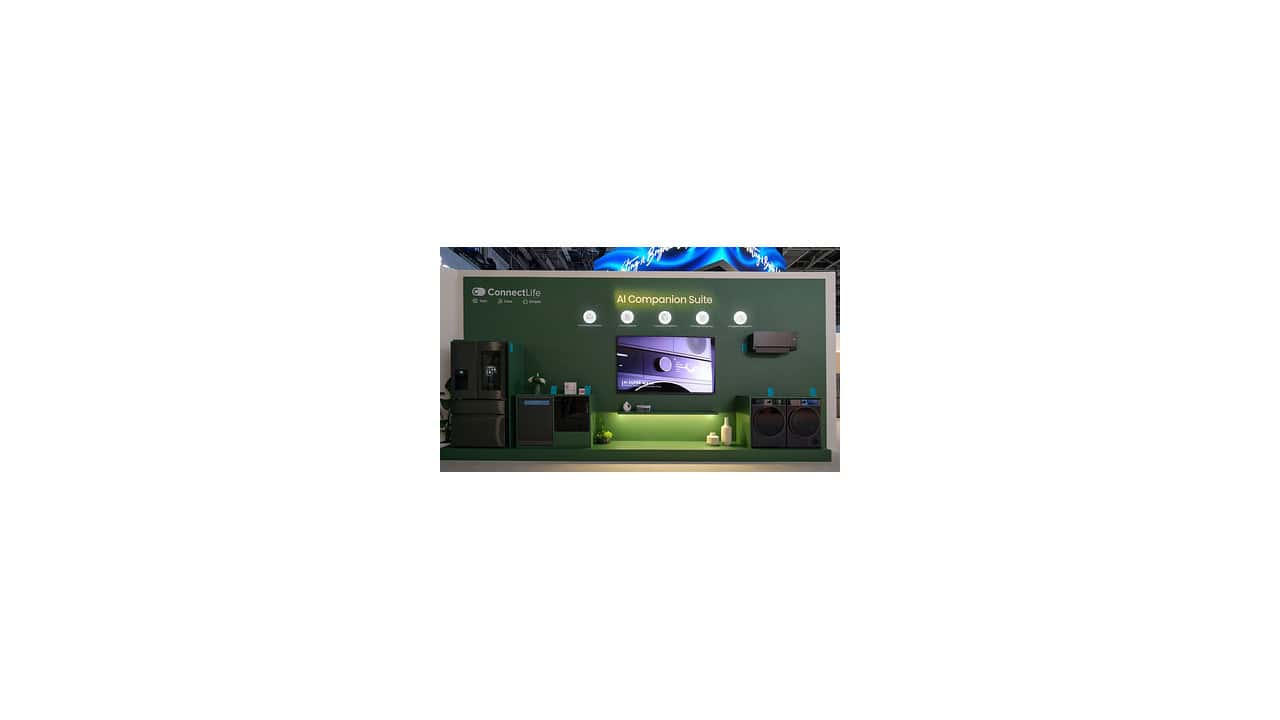
Along with the Alexa+ news, Hisense also showed a broader AI Companion Suite powered by its ConnectLife platform at IFA under the theme “Innovating a Brighter Life.” This suite is focused on three specific areas in the home: the kitchen, the laundry area, and the living space. Hisense is treating the setup as a trade-show concept for now, with no prices or availability dates announced.
In the kitchen zone, the experience starts with a simple question: “What should I make?” The AI Companion Refrigerator is designed to recognize stored ingredients and use that information, along with personal preferences, to suggest meal ideas. Once a user picks a recipe, the system syncs with the AI Companion Oven to support automatic cooking. For drinks, the AI Companion Wine Cabinet recommends pairings and maintains suitable storage conditions, and after the meal the AI Companion Dishwasher recognizes dish conditions and adjusts cleaning to match what it detects.
Automation in laundry and home climate
For laundry, Hisense is presenting an AI Companion Laundry Suite that handles more of the decision-making that people often have to do manually. The system is built to recognize clothing characteristics, then select wash and dry cycles that fit those items. It can adjust the washing and drying process automatically, which Hisense describes as a load-and-go experience, where users do less guesswork around which settings to choose.
In the living space, Hisense is showcasing an AI Companion Air Conditioner that takes in information about indoor conditions and whether someone is in the room. The unit is meant to adapt airflow as people move through the space, responding to presence and environment rather than a pre-set schedule. Alongside that, an AI Companion Energy System looks at weather and time-of-use electricity pricing when planning how a home uses power. The energy system’s goal is to help households make smarter choices about when and how they draw electricity.
The tech platform and IFA recognition
Under all of these concepts is Hisense’s V AIOS platform, which the company describes as a way for devices to sense, think, communicate in a natural way, and then carry out tasks. The Alexa+ integration for select air conditioners fits into that wider story of giving appliances more awareness and decision-making power, while still staying simple for users on the front end. By tying V AIOS to ConnectLife and now to Amazon’s Smart Home AI Toolkit, Hisense is trying to connect its own system with a widely used voice assistant that many households already know.
Hisense also pointed to industry recognition for some of its products at IFA. The Multi Function II Series received a Winner Award, while the X-zone Master was named an Honoree. The U8 Air Master, the W60 3D Kitchen-fit Series, and a 60cm Integrated Wine Cabinet were also recognized. For smart home fans watching from afar, the headline news is still the coming Alexa+ integration for select Hisense air conditioners, but the broader AI Companion Suite shows how the company is thinking about connected appliances across the kitchen, laundry, and living space.