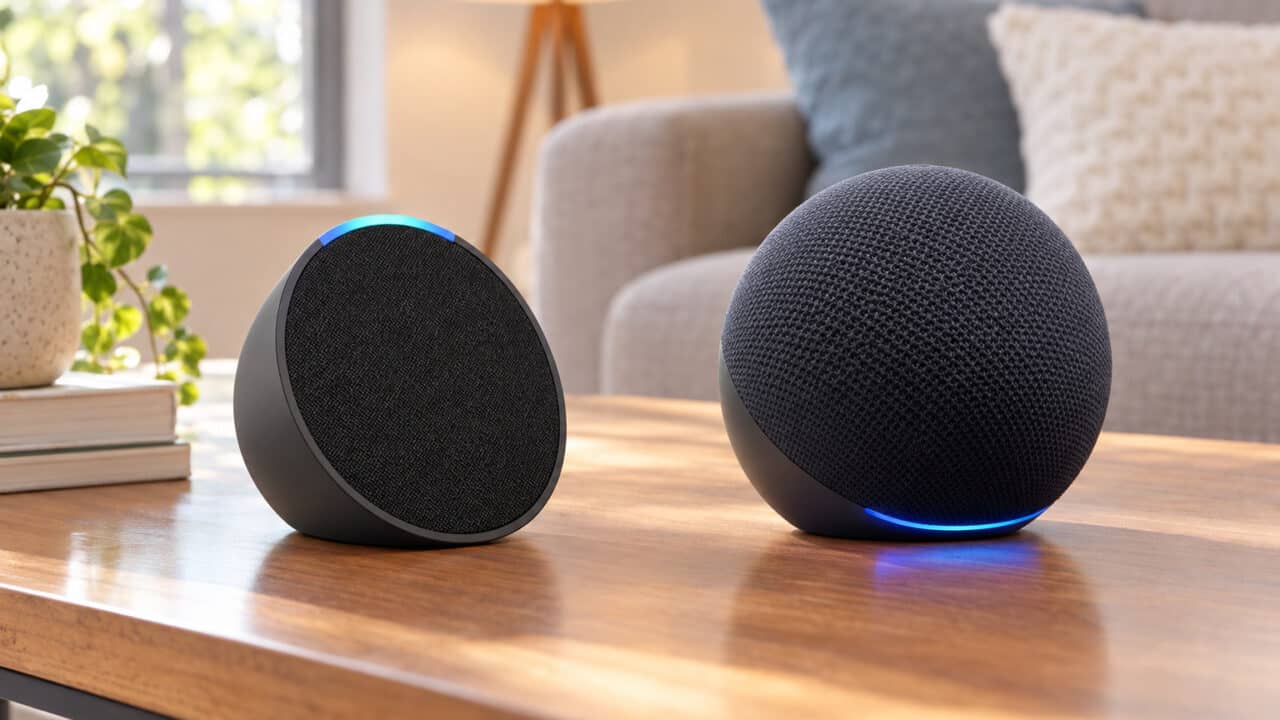
The Echo Pop is Amazon’s smallest Alexa speaker, and the new Echo Dot, launched in October 2026, does far more than the Dot it replaces. The new Dot adds a built-in smart home hub with Zigbee, Matter and Thread, room temperature and presence sensing, and 50% more bass than the previous Echo Dot, and it costs more than twice as much. Pick the Pop if you want a cheap Alexa speaker for a small room, and the new Dot if you want a speaker with a built-in smart home hub.
If you’re in a hurry (or just curious!) –
✅ Check deals on both speakers
Echo Pop vs Echo Dot at a Glance


Echo Pop vs Echo Dot: The Key Differences
A smart home hub vs a basic smart speaker
Amazon says this is the first time it has built a smart home hub into the Echo Dot (the Echo Dot Max, released in 2025, has one too). It supports Zigbee, Matter and Thread, so it can connect compatible devices without a separate hub. We covered the launch in our news post on the new Echo Dot.
The Echo Pop can control compatible smart home devices like smart plugs and lights through Alexa, and Amazon lists it among the Echo devices that support Matter. Amazon doesn’t list it as a Zigbee hub or a Thread border router.
Sound
Amazon describes the Echo Pop as a compact speaker with full sound that’s great for bedrooms and small spaces.
The new Echo Dot has a full-range driver built into its housing, and Amazon says it delivers 50% more bass than the previous Echo Dot. Amazon doesn’t compare it directly with the Echo Pop.
Sensors and smarts
The new Echo Dot runs on Amazon’s AZ3 chip and adds a fourth microphone, which Amazon says helps Alexa hear you as you move around the room. Its Omnisense sensing can detect room temperature and presence, so routines can react to whether someone is in the room or whether it’s too cold.
The Echo Pop uses Amazon’s older AZ2 Neural Edge processor, and Amazon doesn’t list temperature or presence sensing for it.
Both extend an eero network
Amazon says both speakers can extend an existing eero mesh network by up to 1,000 square feet. If you don’t use eero Wi-Fi, this won’t matter to you, and it isn’t a reason to pick one over the other.
Price
The Echo Pop lists for under $50, while the new Echo Dot launched at around $100. That gap is the main reason to still consider the Pop.
What they have in common
Both are Alexa smart speakers with a microphone-off button, both stream music and control compatible smart home devices with your voice, and Amazon pitches both for smaller spaces like bedrooms and apartments.
Echo Pop vs Echo Dot Comparison Table
| Feature | Echo Pop | Echo Dot (2026) |
|---|---|---|
| Speaker | Compact speaker; full sound for small spaces | Full-range driver; 50% more bass than the previous Echo Dot |
| Smart home hub | Matter support only; no Zigbee or Thread listed | Yes: Zigbee, Matter and Thread |
| Room sensing | Not listed | Omnisense: room temperature and presence |
| Chip | Amazon AZ2 Neural Edge | Amazon AZ3 |
| Microphones | Not listed; mic-off button | Four microphones; mic-off button |
| eero Wi-Fi extender | Yes (eero Built-in), up to 1,000 sq ft | Yes, up to 1,000 sq ft on an existing eero network |
| Best for | Small rooms on a tight budget | A smart home hub and room sensing in one speaker |
Amazon Echo Pop Details

The Echo Pop is the budget pick. It’s a compact Alexa speaker for bedrooms and other small spaces, and it handles the basics well: music, timers, questions and voice control of compatible smart plugs and lights.
Product Features:
- Amazon’s smallest Alexa speaker, with full sound for small spaces
- Streams music over Wi-Fi or Bluetooth
- Voice control for compatible smart home devices
- eero Built-in: Amazon says it extends an existing eero network by up to 1,000 sq ft
- Microphone-off button

Amazon Echo Pop
$39.99 as of Jan 17
Amazon Echo Dot (2026) Details
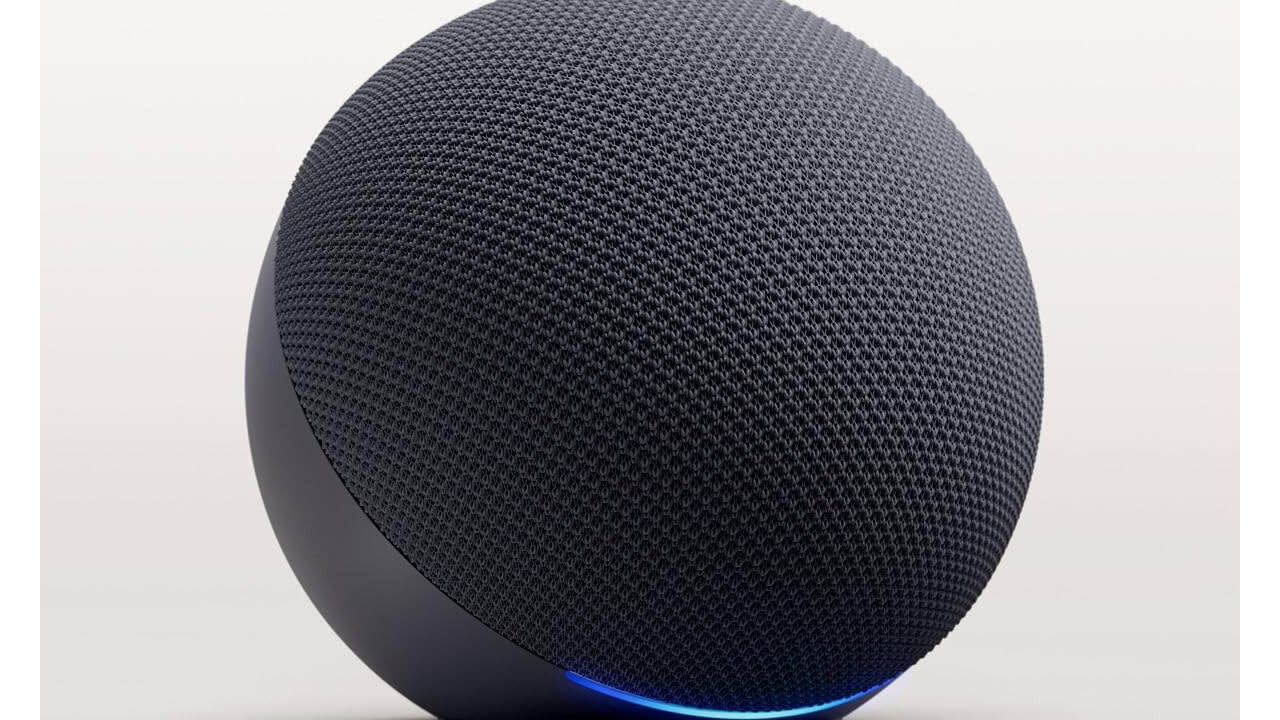
The new Echo Dot is a much more capable speaker than the one it replaces. It adds a Zigbee, Matter and Thread smart home hub, Omnisense room sensing, a fourth microphone and Amazon’s AZ3 chip.
Product Features:
- Built-in smart home hub with Zigbee, Matter and Thread
- Full-range driver with 50% more bass than the previous Echo Dot
- Omnisense room temperature and presence sensing
- AZ3 chip and four microphones
- Built-in eero Wi-Fi extender (up to 1,000 sq ft on an eero network)
- Graphite, Glacier White, Agave Green and Coral Pink
Amazon Echo Dot (2026)
The Verdict: Pop for Budget, Dot for Smart Home
Buy the Echo Pop if you just want Alexa in a small room for as little money as possible, or you’re adding a speaker to a home that already has a smart home hub.
Buy the new Echo Dot if you want a smart home hub that can connect Zigbee, Matter and Thread devices without extra hardware, plus room-aware routines.
Echo Pop vs Echo Dot FAQ
Is the new Echo Dot a smart home hub?
Yes. The new Echo Dot has a built-in smart home hub with support for Zigbee, Matter and Thread.
Does the Echo Pop have a smart home hub?
Not a Zigbee or Thread one. Amazon lists the Echo Pop among the Echo devices that support Matter, but not as a Zigbee hub or Thread border router. It can still control compatible smart home devices through Alexa.
Which sounds better, the Echo Pop or the new Echo Dot?
Amazon hasn’t published a direct comparison. It says the new Echo Dot has a full-range driver and 50% more bass than the previous Dot, and it describes the Pop as full sound for small spaces. We haven’t tested them side by side.
Do I need eero to use the new Echo Dot?
No. The built-in eero Wi-Fi extender only matters to people who already have an eero network, and Amazon says the Echo Pop can extend one too.
Is the old Echo Dot still worth buying?
Only at a clear discount, and only if you don’t need a hub. The previous Echo Dot lacks the built-in hub, the AZ3 chip and the fourth microphone, and Amazon says the new one has 50% more bass.
In Summary
For most people choosing today, the new Echo Dot is worth the extra money for its built-in Zigbee, Matter and Thread hub and room sensing. The Echo Pop still makes sense as the cheapest way to put Alexa in a small room.