Most people who own a home battery are using it often, and not just for blackouts.
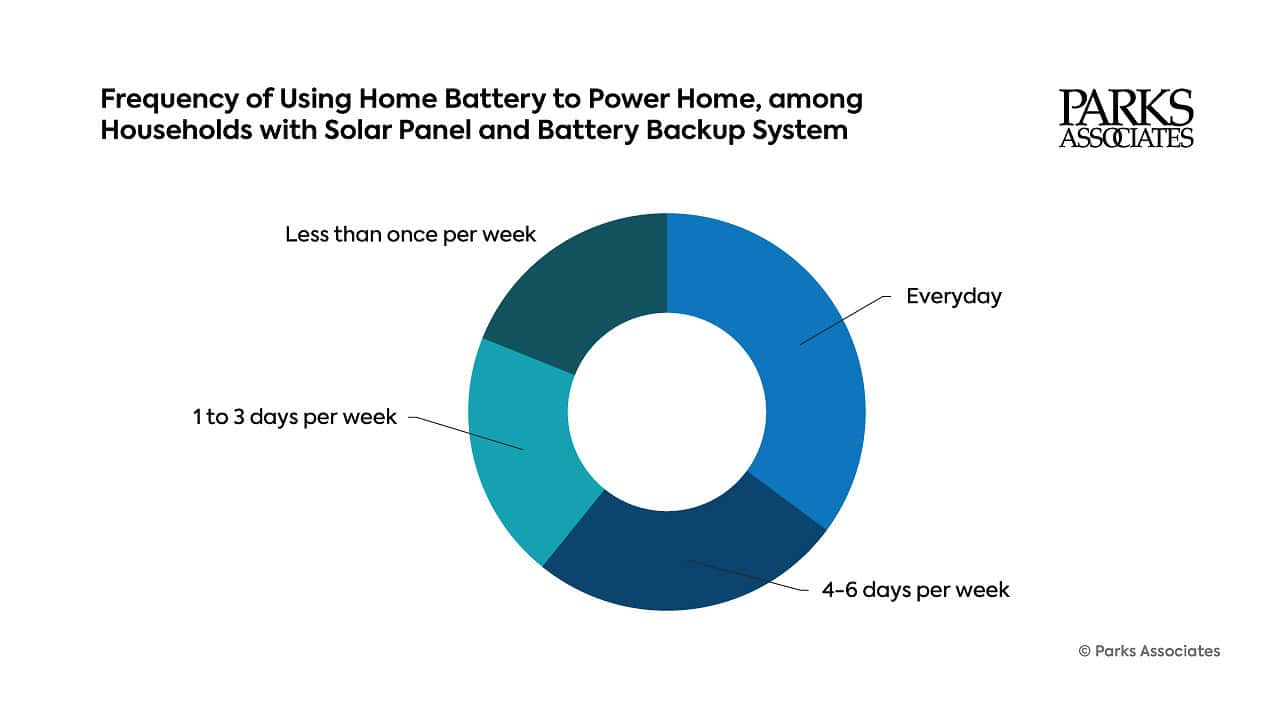
New research from Parks Associates shows that 61% of U.S. homeowners with a battery system use their stored energy at least four days a week, and 35% tap it every single day.
The study looks at residential “whole-home” battery storage, which lets households store power from the grid or rooftop solar and then draw on it later. That stored power can cover everyday use, help during peak-rate hours, or keep the lights on during an outage. Parks Associates says daily use is common among people who also have solar panels, since they can store excess daytime energy and use it at night.
The report, titled *Energy Storage Systems and Whole Home Backup*, is based on a nationwide survey of 8,000 internet households. It focuses on homes that already have a stationary battery installed, rather than portable power stations or car batteries. The research firm tracks how often people use stored power, what they use it for, and what might push more homeowners to add batteries in the future.
One clear takeaway is that backup power is only part of the story. Many households use their batteries to manage costs, such as shifting usage away from expensive peak hours from their utility. Others want more control over their energy use, especially when they have solar and do not want to send all their extra power back to the grid at low credit rates.
The study arrives as more utilities roll out time-of-use pricing and demand response programs, where customers can get incentives for reducing load at certain times. Battery owners are in a position to join those programs, since they can discharge stored energy when the grid is stressed. Parks Associates is sharing these findings with energy companies, device makers, and installers who are trying to understand how to design offers, plans, and equipment that appeal to homeowners.
Parks Associates plans to continue watching how battery usage grows as more people install solar, smart panels, and other connected energy devices. For now, the data points to a clear pattern: once people invest in a home battery, they tend to use it regularly, not just for emergencies.
View the original press release.