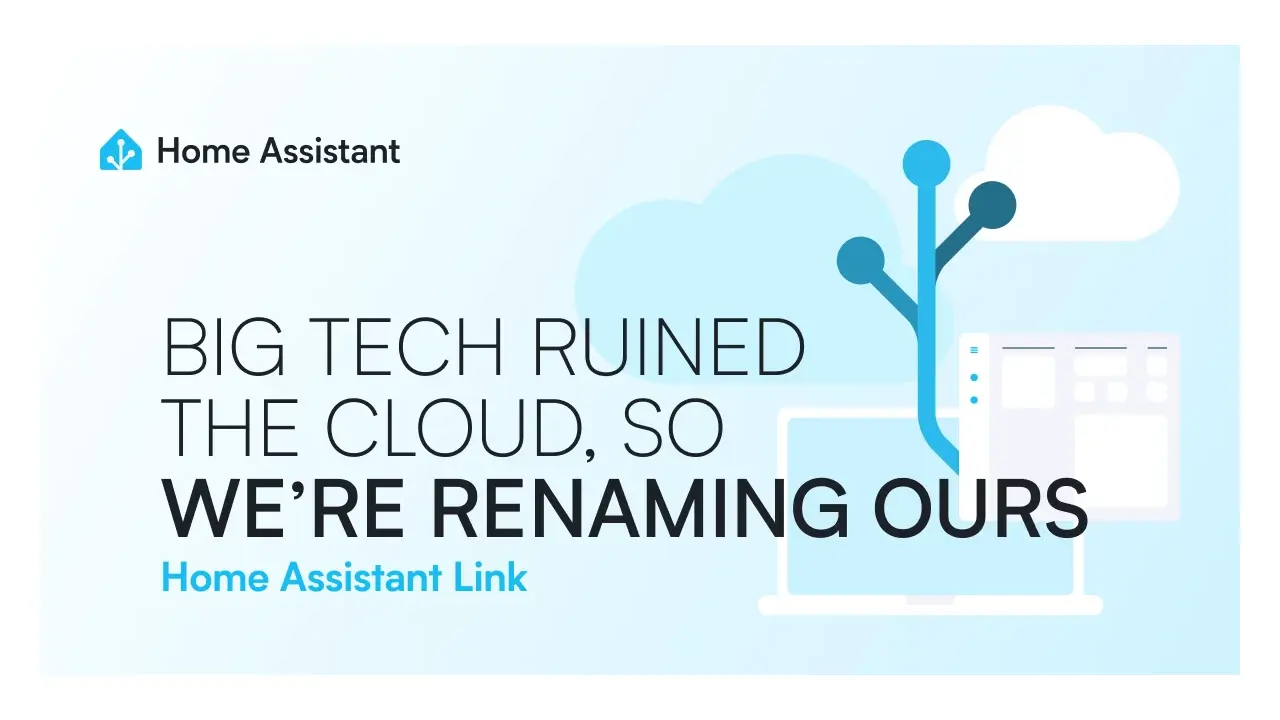
Nabu Casa plans to rename its Home Assistant Cloud subscription to Home Assistant Link, aiming to better describe what the service does and how it treats user data. The company says the new name is not official yet and that it intends to make the change with the December 2026.12 Home Assistant release, and it is inviting community feedback until then. Home Assistant itself will continue to run locally, and Nabu Casa stresses that Link is an optional add-on, not something you need to keep your smart home running.
Why “Cloud” Is Out And “Link” Is In
Nabu Casa says it is moving away from the word “cloud” because of what that term has come to represent with Big Tech: rising subscription prices, outages, and constant data harvesting. The company argues that its service is meant to be private, optional, and free from lock-in, which does not match how most people think about cloud products. Home Assistant Cloud has never been a way to run Home Assistant on someone else’s servers, and Nabu Casa repeats that Home Assistant should always run locally in your home.
The new name, Home Assistant Link, is meant to more accurately describe what the service actually does: link a Home Assistant system running in your home to online features. Nabu Casa shares that even Home Assistant’s founder, Paulus Schoutsen, has had to explain on stage why he tells people “don’t buy products that require the cloud to work” while also talking about something called “Home Assistant Cloud.” The company sees Link as a better fit that avoids that confusion while still offering an online service for people who want extra features.
Optional By Design, With No Lock-In
Nabu Casa is clear that Link is not required for Home Assistant to work. Your smart home, lights and all, will keep running locally even if you never sign up for the service. The company pushes back against how many Big Tech smart home products stop working or lose major features when their cloud services are shut down or changed, turning expensive devices into “paperweights.”
Home Assistant is designed so that if you do not want Link, you miss out on some extras, but your system still runs your automations and devices. Nabu Casa also spells out that if you subscribe to Link and later decide to unsubscribe, your smart home will keep working. The company sees this as a direct contrast to “walled garden” systems where a cloud account is required and users get trapped by outages or price increases.
Privacy, Data Control, And Funding Open Source
A big part of the rebranding story is how Nabu Casa wants to separate Link from the way Big Tech treats user data. The company criticizes common cloud practices where data is monetized, used for ads, used to train AI, or sold to third parties. In contrast, it says data going through Link is encrypted so that only the user has the key, and that neither Nabu Casa nor the Open Home Foundation want access to that data.
Nabu Casa also ties subscriptions directly to the future of Home Assistant as an open smart home platform. The company states that the majority of profits from Link subscriptions go to the Open Home Foundation. That money supports people working on Home Assistant, from salaried staff to volunteers, which Nabu Casa says has helped move the project from a nights-and-weekends effort toward something that can invest back into its community and stay sustainable long term.
What Link Does
Home Assistant Link is focused on making some parts of Home Assistant easier and adding online-only features on top of a local system. One of the first problems it was built to solve was remote access, so users can reach their Home Assistant when they are away from home without having to set up the networking on their own. Nabu Casa notes that it recently completed a major backend update that moves Link to a new bare-metal setup and tries to route users to the closest server, which the company says improves the responsiveness of remote access.
Link also handles connection to Amazon Alexa and Google Home, which can be tricky to set up on your own. Through Link, users can connect those voice platforms to Home Assistant without needing to build and maintain that connection themselves. On the voice side, Link offers online speech-to-text, which Nabu Casa says tends to be faster, supports more languages, and is more reliable than self-hosted options. Users can also store an online backup of their Home Assistant data so they can recover it while keeping it private, and they get access to human support from “real humans” at Nabu Casa if they run into problems.
On top of that, Nabu Casa points to a new, easier-to-use account page at its account website and a new settings page inside Home Assistant that includes a setup wizard for the service. Those changes are part of an ongoing effort to refine Link and add features such as new security options and account management tools that ride on top of the backend improvements.
Community Feedback Before The Final Switch
Nabu Casa announced the Home Assistant Link name on October 2, but it does not plan to make the switch official until December. The company intends to make the name change official with the 2026.12 Home Assistant release in December, and it is asking the community to share feedback well before then. The company stresses that even though Link is a Nabu Casa product, Home Assistant itself is a community project, and it wants to hear whether users like the new name or see problems with it.
For Nabu Casa, the label is less important than the principles it wants Link to stand for: privacy, no lock-in, and long-term support for an open, local smart home. The company positions Link as a way to make Home Assistant easier and more approachable for people who do not want to tinker with every part themselves, while still keeping the core platform free, local, and independent of any subscription.