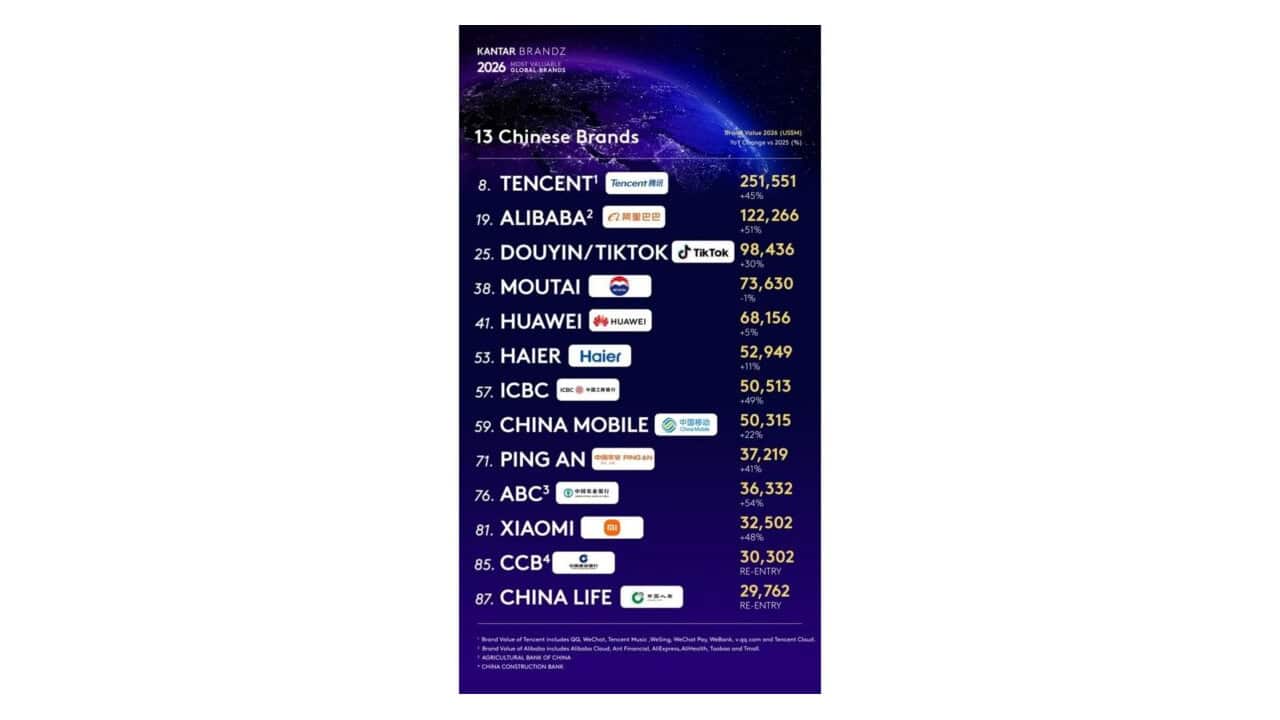
Haier just picked up a big branding win: it was named the world’s only IoT ecosystem brand in the Kantar BrandZ Global Top 100 ranking for the eighth year in a row. Kantar BrandZ looks at both financial data and consumer opinions to estimate how much a brand is worth, so staying in that top group for this long signals steady strength with shoppers and investors. Haier’s brand value has kept rising during this stretch, and the company credits that to its push into connected homes and user‑driven product design.
The core of Haier’s strategy is its IoT ecosystem approach, which focuses on “smart scenes” instead of single smart gadgets. Instead of just selling a refrigerator or a washing machine that connects to Wi‑Fi, the company links appliances, home systems, and services into full scenarios built around daily life. Examples include whole‑home air solutions that adjust temperature and air quality, connected kitchens that sync cooking and storage, and smart energy systems designed to cut household consumption. The idea is that users interact with a unified experience across devices, rather than dealing with each product as a separate item.
To pull that off, Haier has leaned into what it calls user‑driven innovation, where product design starts from real household needs and feedback instead of only from engineering labs. The company runs open platforms where users can share ideas and problems, then works those into new features and services. In home appliances, that shows up in things like remote monitoring, personalized settings, and cross‑device coordination. In energy management, it shows up in smart controls that try to balance comfort with lower utility bills, using connected hardware plus software services.
Haier has also built dedicated ecosystem brands around regional and lifestyle needs. Casarte targets premium home users with high‑end appliances and design‑focused products, while AQUA focuses on convenient, practical solutions in select markets. These brands are woven into Haier’s larger IoT ecosystem so that a household can mix products from different lines and still plug into the same connected experience. The company says this layered brand structure helps it reach different customer groups without breaking the overall system.
On the industrial side, Haier has pushed its IoT thinking into factories and supply chains with an industrial internet platform called COSMOPlat. This platform is designed to let companies manage production, logistics, and customization around real‑time user demand rather than just forecasts. Haier reports that COSMOPlat has been used in many sectors, including home appliances, construction, and agriculture, to support more flexible manufacturing and more responsive service. By tying consumer feedback and data back into production, the company aims to shorten the loop from customer need to finished product.
Across all of this, Haier is leaning on open “ecosystem brand” positioning instead of a closed hardware model. It works with partners across industries to connect devices, apps, and services, with the goal of giving users more choices inside the same IoT environment. The repeat recognition in the Kantar BrandZ Global Top 100 suggests that this strategy is gaining long‑term traction. For consumers, that likely means more connected products that are designed to work together from the start, and for the brand, it strengthens Haier’s place as a major player in the smart home and IoT space.
View the original press release.