Amazon’s upgraded voice assistant, Alexa+, is now tailored for Mexico in a way that goes far beyond flipping English into Spanish. The new version is designed to sound like a real Mexican person you might talk to at home, picking up on slang, humor, and local habits so conversations feel natural instead of robotic. It is the first launch of Alexa+ in a non‑English language, with Mexico leading the way and Italy coming after.
The team behind Alexa+ in Mexico wanted the assistant to feel like part of the household, not just a gadget in the corner. That meant teaching it what words like “chido” and “buena onda” actually mean in context, and when to use each one. “Chido” can make a song or a concert sound cool, while “buena onda” is for describing a person. Alexa+ also now understands the famously slippery “ahorita,” which might mean “in five minutes” or “later today,” depending on how people are talking.
Getting those cultural details right took work from engineering, data science, and country teams focused on how people really speak across Mexico’s 130 million residents. They had to find expressions that are local but still widely used, so Alexa+ would not sound like it came from just one city or age group. They also had to strike a balance with slang and idioms: use too little and Alexa+ feels stiff, use too much and it starts to sound like a caricature. During testing in other countries, for example, the Canada version leaned on too many “moose” jokes, so the team watched carefully to avoid overusing expressions like “órale” in Mexico.
A big part of the work focused on tone and personality. Early feedback was that the Mexican Alexa+ sounded too formal and rigid, more like a textbook than a person. Engineers changed the large language model setup to make responses friendlier, warmer, and more upbeat. Because multigenerational homes are common in Mexico, they also tuned Alexa+ to be age appropriate whether it is answering a kid’s question, chatting with parents in the kitchen, or helping grandparents with reminders. On top of that, a personalization layer and memory features help Alexa+ adapt to each household’s habits over time.
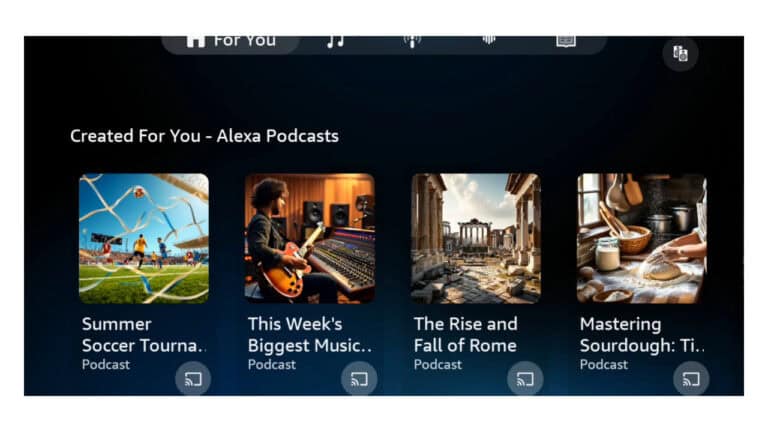
Music and entertainment played a major role in why Amazon chose Mexico as the first non‑English country for Alexa+. Company leaders point out that Mexico is one of the strongest markets for the Alexa brand and one of the top consumers of music streaming. For many people, Alexa is a main way to discover and play new songs. Amazon sees a smart speaker that can respond in local Spanish and tap into unlimited streaming as a natural match for a culture where music is a big part of daily life.
Behind the scenes, a lot of the challenge came from retraining Alexa’s models to “think” in Spanish instead of defaulting to English. A lot of global AI systems are trained on internet data where English dominates, which can lead to odd behavior when people mix languages. For example, when someone in Spanish asks for Bruce Springsteen songs like “Dancing in the Dark” or “Tougher than the Rest,” the assistant might reply in English because those titles are English words. The Alexa+ team used reinforcement learning and more training data in Spanish, Italian, and other languages to help the assistant understand the request and respond in the right language and style.
That work also had to respect differences between countries that share a language. Engineers spent a lot of time tuning the models so that making Alexa+ warmer and more casual for Mexican users would not make it too informal in places where people expect a different tone. Large language models are usually trained on broad “global” versions of a language, not regional flavors. For Alexa+, Amazon is layering country‑specific data and feedback on top of those general models so the assistant can behave differently in Mexico, Canada, Italy, and other markets while still sharing the same core technology.
For Amazon leaders working on Alexa in the Americas, Mexico is just the start of a larger push to bring culturally aware versions of Alexa+ to more places. They say the same approach they used to teach Alexa+ Mexican slang, humor, and manners will carry over to other languages and regions. The goal is for people in each country to feel like they are talking to someone who “gets” their way of speaking, whether that means a joke in Mexican Spanish, a reserved tone in another market, or a different mix of local references somewhere else.
View the original press release.